
The Question of Accountability: Andrew Mountbatten-Windsor's Arrest and Public Scrutiny
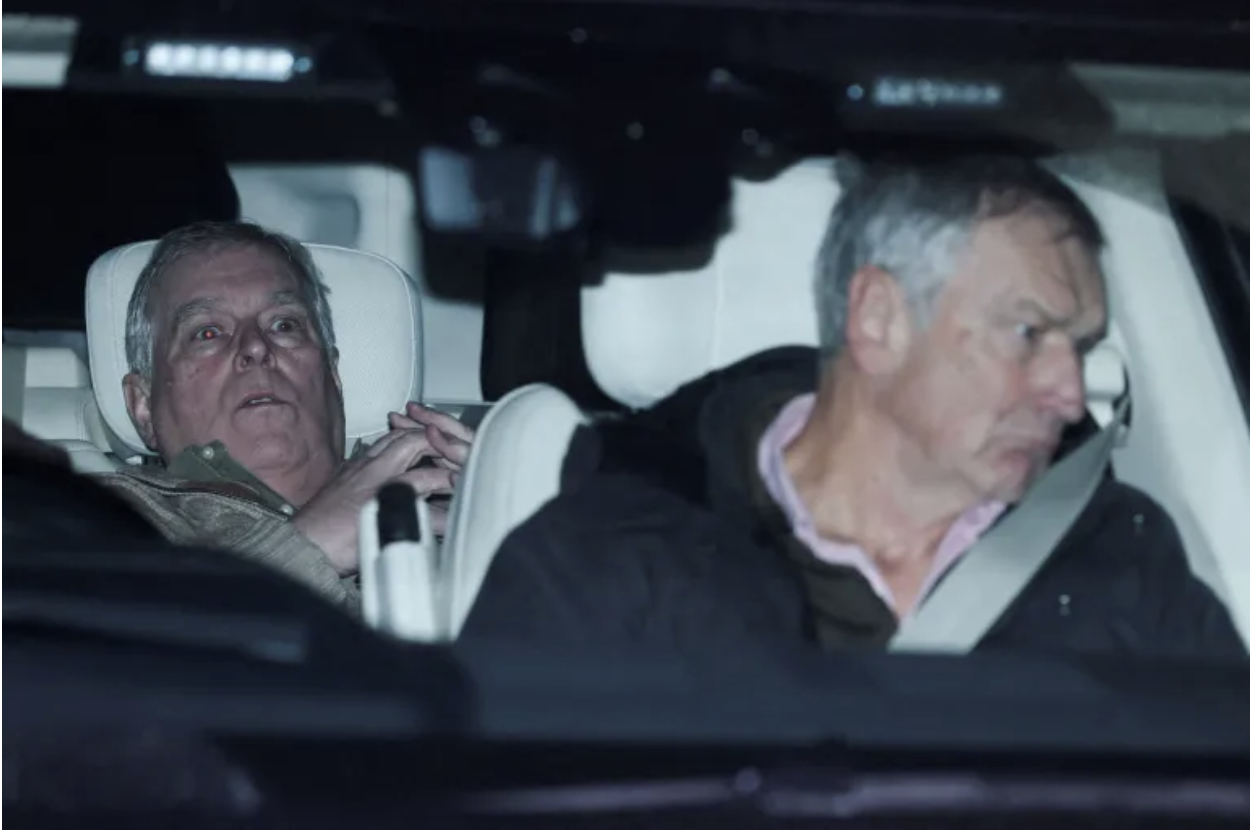
Andrew Mountbatten-Windsor detained in police car; credit: Phil Noble for Reuters
For the first time since the execution of King Charles in 1647, a senior royal has been arrested. The former Prince Andrew Mountbatten-Windsor, who is the son of Elizabeth II, was arrested on February 19th, his birthday, at his estate in Norfolk, England. The arrest was made “on suspicion of misconduct in public office” --- specifically, officials allege that he shared sensitive, confidential government information with Jeffrey Epstein while serving as a British trade envoy.
For a short while, there was a ripple of hope in the public sphere as many believed that the former Prince would have been the first out of many to face justice for the terrible crimes associated with Epstein. Indeed, over the past few months many rejoiced as Andrew’s titles were stripped away to a point where he was no longer legally a prince; in fact, the government is still considering taking him out of the line of succession. However, as per the British judicial system’s rules, after some time a suspect must be released from custody. The international public has been left wondering what this arrest was supposed to mean: some procedural step the authorities needed to take, or some symbolic gesture to prove that accountability is still valued by world leaders?
His arrest, although fruitless for the time being, raises greater questions about the judicial system across the pond. Americans are more dissatisfied than ever with the current state of affairs in the murky mysteries of politics, but it seems that no legitimate scrutiny has been forced. The only sign that the government is tending to what may be the biggest scandal since Watergate has been the House oversight committee, whose hearings have gained traction for the testimonies of Attorney General Pam Bondi and billionaire Les Wexner.
But even then, no progress seems to have been made --- although thousands of documents have been released on the FBI’s “Epstein Library”, public figures and institutions have only been discredited more and more. Only 6% of Americans are satisfied with the quantity of current releases, while 53% believe that President Trump is deliberately concealing files. Meanwhile, the hearings themselves have been almost comical. When Ms. Bondi was asked by New York’s District 12 Representative Jerry Nadler (D) about the lack of indictments for co-conspirators, she responded: “the Dow is over 50,000 right now”. When Ghislaine Maxwell was put on the stand, she took her right to the fifth amendment for every question asked. During Mr. Wexner’s deposition, his lawyer whispered to him in a hot-mic moment: “I'll f***ing kill you if you answer another question with more than five words, OK?” Mr. Wexner’s counsel was presumably joking, which arguably only makes the situation more troubling --- how could the accused be so comfortable with their scrutiny that they would laugh mid-trial?
If Prince Andrew’s arrest was meant to signal the law’s neutrality despite the status that public figures may hold, the underwhelming resolution to this drama has instead reinforced the opposite perception. Across the Atlantic, the spectacle surrounding our era’s greatest scandal has done little to restore public confidence in the impartiality of justice or the strength of our institutions. For all the supposed transparency that has been offered by our governments, none of it substitutes for genuine accountability. Once public faith in the rule of law braces as elites from London to Washington appear exempt from consequence, the law does not merely look weak, but becomes weak.
