
Applause and Absence at the 2026 State of the Union
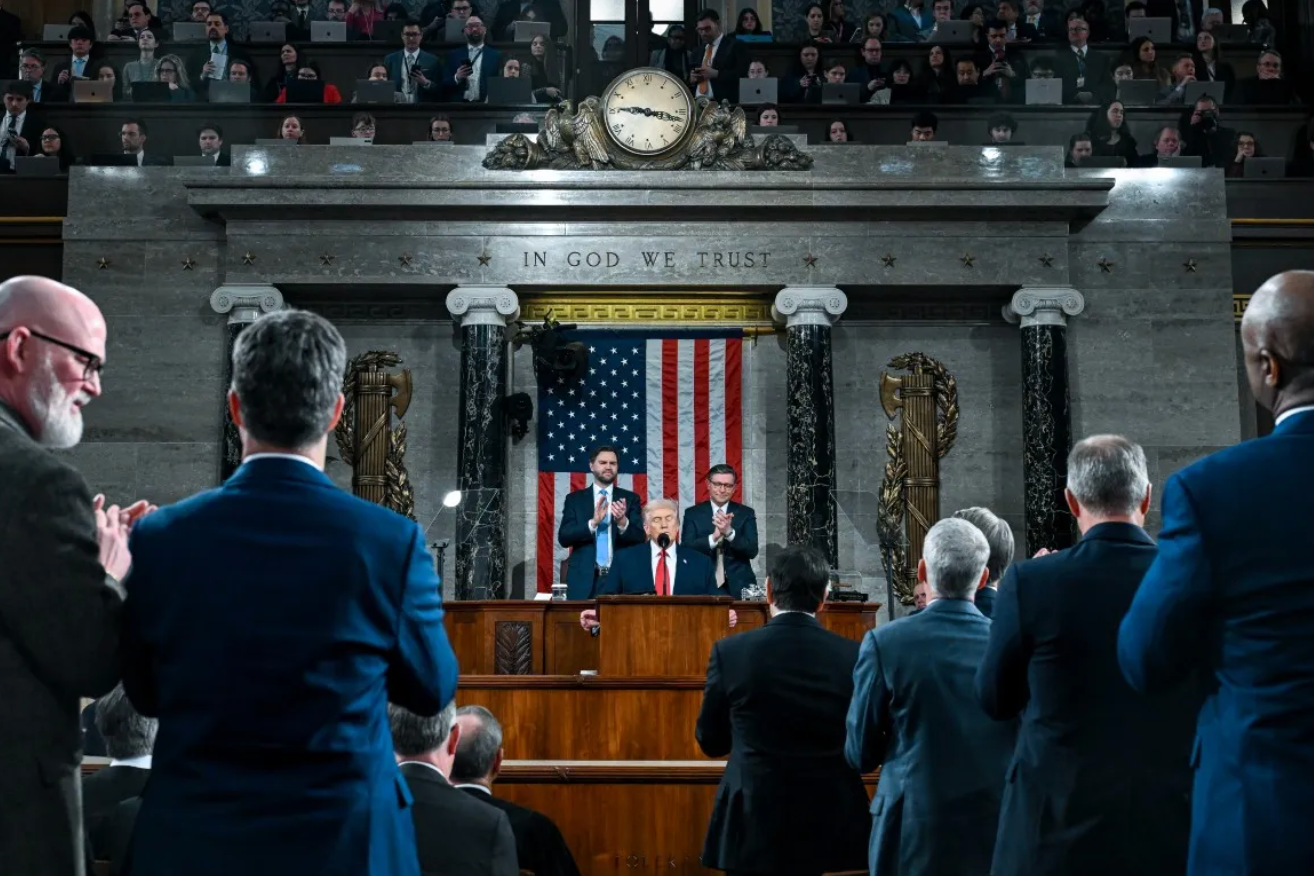
President Trump delivering the State of the Union. Credit: Kenny Holston-Pool for Getty Images
On Tuesday, February 24th, President Trump delivered the second State of the Union of his second term. This was the longest State of the Union in American history, beating out a record set by President Clinton in 2000. The administration and Republican platform writ-large had high stakes coming into the night—this is, after all, both the 250th anniversary of our nation as well as a crucial midterm year. Recent public relations crises in the Epstein files and controversy surrounding ICE activities in Minneapolis only increased the pressures the president faced as he took the stage. This State of the Union has gained attention not for just what was said within the speech itself—it contained the typical rhetoric that the President has employed when discussing the country’s progress and problems, as well as historical statistics that back national growth since he took office—but for its reception.
Some believe that Mr. Trump’s rhetoric during the speech evoked a kind of pontification as he denounced what he calls the ‘radical left’ for mismanaging the country during the Biden administration, as well as in the various blue cities which have attempted to resist his agenda since the president’s inauguration. One might make the case, however, that the president’s opponents in the chambers displayed just as much partisanship. Only around half of all Democratic members of Congress came to the State of the Union, and those who did appear made their discontent clear. They did not rise for applause during various moments in the speech, and often attempted to heckle the President. Representatives Al Green and Ilhan Omar gained traction for demonstrating during Trump’s address, and the former was escorted out of the chambers (as he was last year).
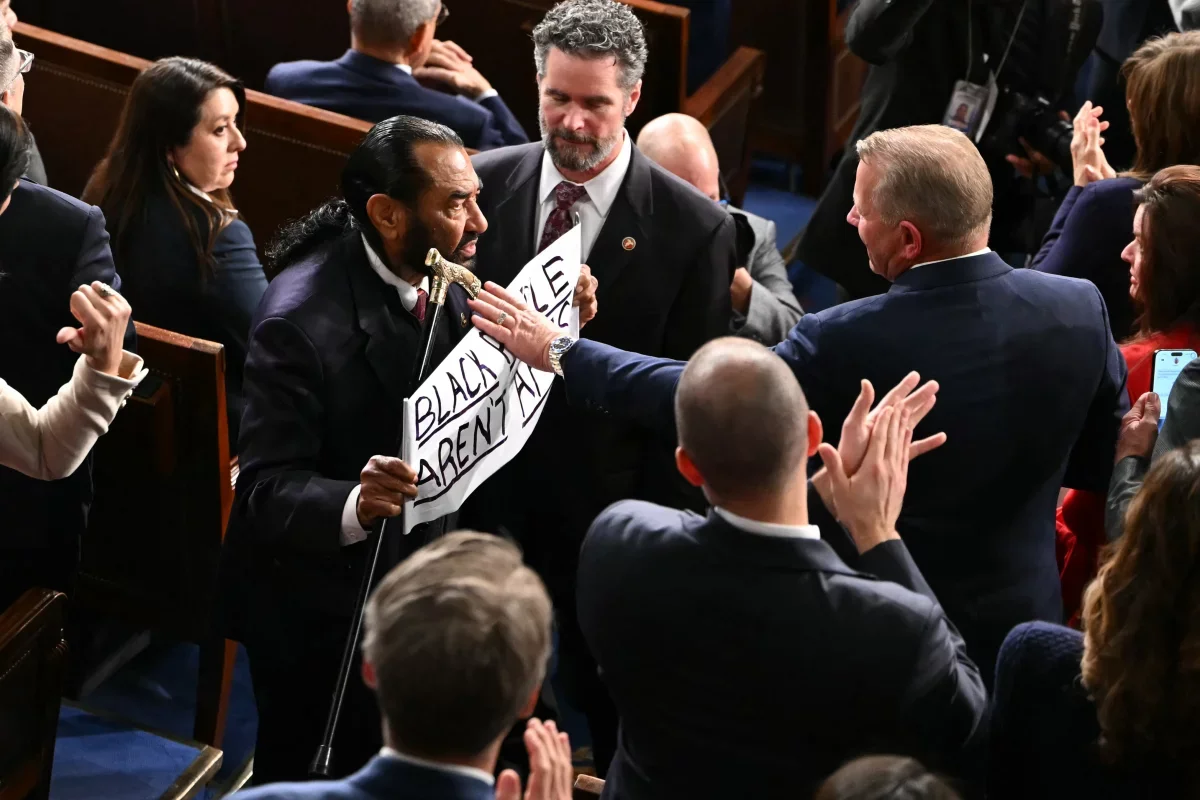
Rep. Al Green (TX-09) being escorted out of the House floor. Credit: Andrew Cabarello-Reynolds for Getty
At the same time, many saw the speech as making great strides towards national unity. Throughout Mr. Trump’s address, members of Congress—though particularly concentrated on the Republican side—gave the president standing ovations, often chanting “U-S-A” after the President lauded national successes. One of the most striking moments, for example, was when the entire men’s Olympics hockey team, which had won the first hockey gold medal for the US since 1980. The President announced that the goalie, Connor Hellebuyck, would be receiving the nation’s highest civilian distinction, the Presidential Medal of Freedom, for his critical saves during the tense game against Canada. Similar displays occurred throughout the speech, with the president bringing in various political, law enforcement, and cultural figures to receive awards or praise from the chamber. Perhaps the fragmented unity this speech represented is exemplified by his reception of the Supreme Court. As the president proceeded to the presiding desk, he shook hands with four attending justices (the same number as the year prior). This comes after high tensions between the executive branch and the Supreme Court after the Court struck down Trump’s tariffs on February 20th.
Time will tell if this State of the Union, for its substance or for its reception, will have a significant effect on the Trump administration’s legacy on either the crucial congressional elections that will take place this year or the development of America's national spirit into its 250th year.
